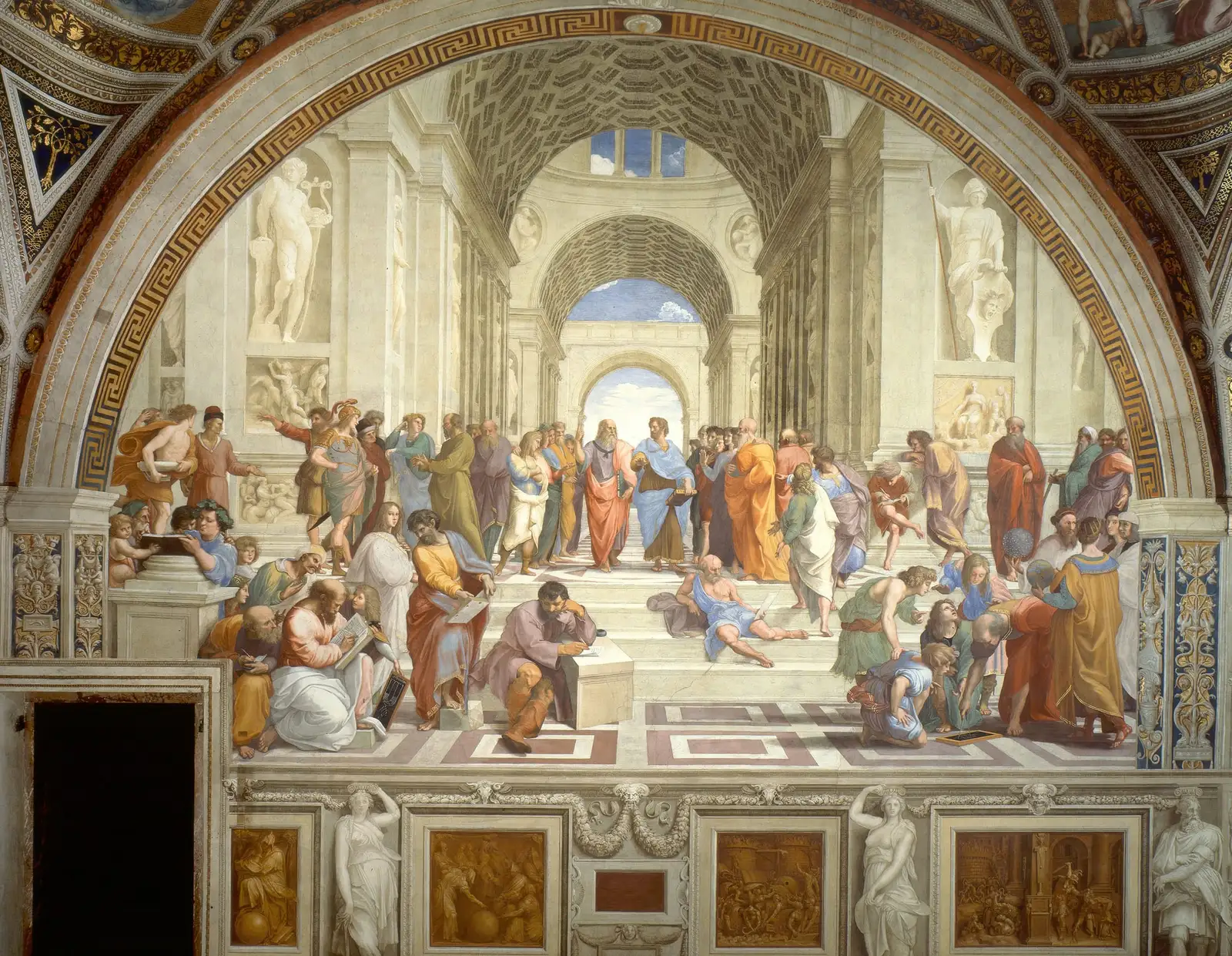
Science as a Civilizational Project
Versão em português Ciência como Projeto de Civilização
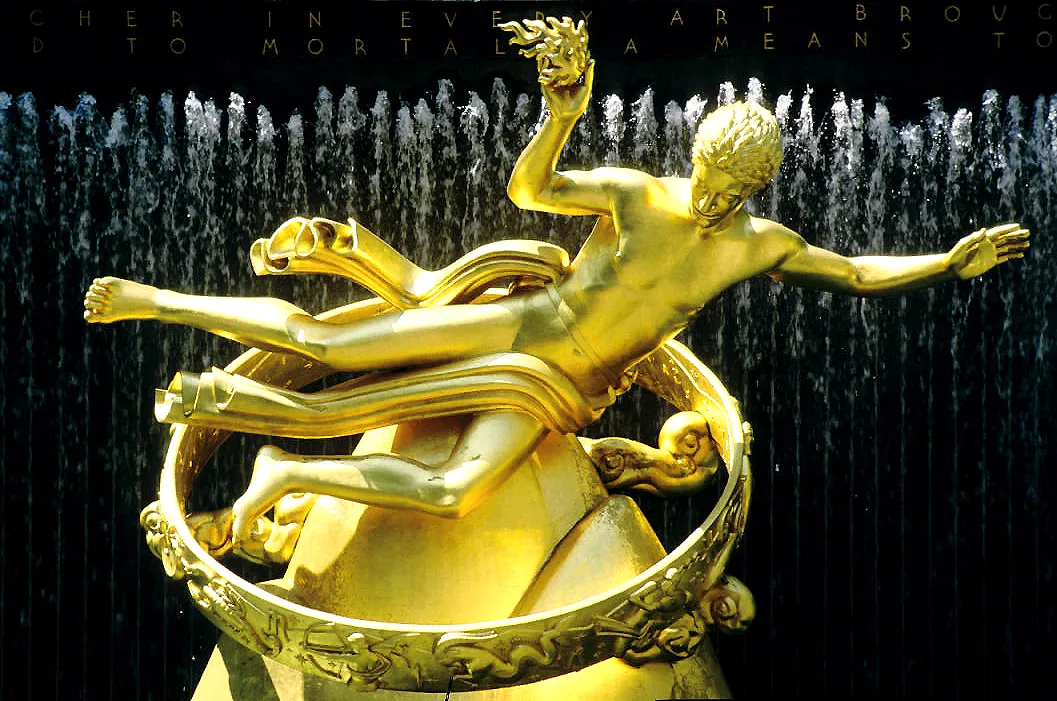
This is the English translation of the original Portuguese essay ‘Ciência como Projeto de Civilização’.
The most widespread misconception about science is that it is a collection of facts. It is not. Science is a method — a social and epistemic institution — and the specific set of facts it has produced at any given moment is far less important than the process that produced them and the civilization that makes that process possible.
This essay argues that science, understood in its full scope, is the most ambitious civilizational project humanity has ever undertaken — not because it answers every question, but because it is the only institution we have built that systematically corrects its own errors. And it is precisely this self-correcting character that makes it not just a tool for producing knowledge, but a model for how a civilization might organize itself in the face of irreducible uncertainty.
I. The Institutional Miracle
The history of science, when read carefully, is not primarily a history of brilliant individuals making discoveries. It is primarily a history of the construction of institutions — journals, universities, peer review, replication protocols, statistical standards — that allow knowledge to accumulate reliably across generations and across the biases of individual knowers.
This is genuinely extraordinary. For most of human history, knowledge was transmitted through authority: what the wise man said, what the text prescribed, what the tradition mandated. The invention of a method that in principle subordinates every claim — including the claims of the most eminent authorities — to empirical verification is one of the most radical institutional innovations in the history of the species.
Consider what this requires socially. It requires a culture in which being proven wrong is not a shame to be avoided but a correction to be welcomed. It requires institutions that reward skepticism rather than deference. It requires a shared commitment to procedures that constrain individual bias. None of this is natural. All of it is constructed, maintained, and perpetually under threat.
II. The Relationship Between Science and Power
Science does not exist outside political economy. It requires funding, which creates dependencies. It produces knowledge that creates power, which creates incentives to control it. The pharmaceutical industry that funds clinical trials has interests that may not align with the interests of patients. The state that funds weapons research shapes the questions that physicists ask. The technology company that employs AI researchers defines the problems those researchers will work on.
This is not a reason for cynicism about science. It is a reason for vigilance about its institutional conditions. The self-correcting character of the scientific method is not automatic; it is dependent on specific institutional arrangements — editorial independence, diversity of funding sources, protection for dissenting researchers, publication of negative results — that can be undermined when the interests of funders and the interests of truth diverge sufficiently.
The defense of science as a civilizational project therefore requires more than a generic pro-science attitude. It requires attention to the specific institutional conditions that make the self-correcting character of science possible — and active resistance to the forces that erode those conditions.
III. Science and Religion: A More Complex Map Than the Standard Narrative
The popular narrative about the relationship between science and religion — a progressive liberation from superstition — is historically inadequate. Many of the foundational figures of modern science were deeply religious, and the institutional spaces in which early science developed were frequently ecclesiastical. The conflict thesis, popularized in the 19th century, captures a real tension but obscures a more complicated story of mutual influence, accommodation, and divergence.
What is true is that the epistemic authority structures of science and religion are in tension at a fundamental level. Science is institutionally committed to the revisability of any claim in the face of evidence; most religious traditions are institutionally committed to the permanence of core doctrines. This does not make religious belief incompatible with scientific practice — many excellent scientists are religious — but it does create a structural tension that neither simple harmony nor simple conflict adequately captures.
IV. The Crisis of Replication and the Self-Repair of Science
Beginning around 2010, the scientific community began to grapple seriously with the replication crisis — the discovery that a substantial fraction of published findings in psychology, medicine, and several other fields could not be replicated by independent researchers. The figures, when they emerged, were alarming: in some domains, fewer than half of published findings survived replication attempts.
The standard anti-science response is to treat this as evidence that science is fundamentally unreliable. The correct response is precisely the opposite: the fact that the scientific community identified this problem, studied it systematically, quantified it, debated its causes, and began implementing structural reforms is itself evidence that the self-correcting mechanism works — slowly, imperfectly, but genuinely. No other knowledge-producing institution has done anything comparable.
Pre-registration, open data, registered reports, adversarial collaboration — the reforms that emerged from the replication crisis represent the scientific community applying the scientific method to itself. This is what it looks like for an institution to take its own epistemological commitments seriously.
V. Science as Civilization’s Long-Term Bet
The deepest argument for science as a civilizational project is not about what it has produced — remarkable as those products are — but about what kind of civilization is required to sustain it. A civilization that supports free inquiry, that tolerates heterodox conclusions, that builds institutions capable of collective self-correction, that values the patient accumulation of knowledge over the immediate satisfaction of ideological certainties — that civilization is making a long-term bet on a particular model of what it means to know.
That bet has not always paid off in the short term. Galileo was imprisoned. Semmelweis was ignored. Wegener was mocked. The history of science is strewn with examples of the institutions temporarily failing the method. But the trajectory, when measured across generations, is unmistakably toward greater accuracy, greater scope, and greater capacity to produce knowledge that is genuinely reliable — not merely persuasive, not merely traditional, but demonstrably accurate about the structure of reality.
That trajectory is not guaranteed. It depends on civilizational choices that are being made, right now, about funding, about institutional independence, about the relationship between science and political power, about what kinds of questions are worth pursuing and what kinds of answers are acceptable. The defense of science is therefore always, simultaneously, a political act — not in the sense of partisan politics, but in the deeper sense of choices about what kind of civilization we want to be.
Originally published in Portuguese. Read the original here: Ciência como Projeto de Civilização
Comentários
Ainda não há comentários. Seja o primeiro a comentar «Science as a Civilizational Project».
Entre ou crie uma conta para curtir, comentar e receber os próximos textos por e-mail.