Intelligent Computers, Life Extension, and the Reconfiguration of Human Conditions
Versão em português Computadores Inteligentes, Extensão de Vida e a Reconfiguração das Condições Humanas
This is the English translation of the original Portuguese essay ‘Computadores Inteligentes, Extensão de Vida e a Reconfiguração das Condições Humanas’.
George Church, a professor of genetics at Harvard and one of the architects of the Human Genome Project, articulates a civilizational paradox with disarming clarity: if we could choose only one technology to develop, we should choose the one that gives us the most time to develop all the others. To reverse aging, in this logic, is not a project of vanity or science fiction — it is the most rationally fundamental meta-investment that a technological civilization can make. And for the first time in history, artificial intelligence is transforming this philosophical argument into a computationally tractable research program.
This essay examines, with technical rigor and conceptual ambition, the convergence between artificial intelligence and the science of longevity. This is not naive futurism. What is at stake is a profound reconfiguration of biology as a computational discipline — a transition that has already produced concrete results (AlphaFold, epigenetic clocks based on deep learning, virtual screening of trillions of molecules) and that promises, in the coming decades, to radically transform humanity’s relationship with aging, disease, and death.
I. The Prefatory Problem: Why Aging Is Different from Disease
The fundamental distinction between aging and disease is not widely appreciated in public discourse, even though it is consequential for how we think about both medicine and longevity research. Diseases are deviations from normal function; aging is the normal function of the biological system as it proceeds through time. This means that treating aging is not a matter of correcting an aberration — it is a matter of redesigning the baseline.
The hallmarks of aging, as catalogued by López-Otín and colleagues in their landmark 2013 paper, include: genomic instability, telomere attrition, epigenetic alterations, loss of proteostasis, deregulated nutrient sensing, mitochondrial dysfunction, cellular senescence, stem cell exhaustion, and altered intercellular communication. Each of these represents a complex biological process that unfolds over decades through mechanisms involving thousands of molecular interactions.
The combinatorial complexity of these processes is precisely where AI becomes indispensable. No human researcher, and no team of human researchers, can hold in working memory the thousands of molecular relationships required to reason productively about how a given intervention will propagate through the biological system. This is not a failure of intelligence; it is a feature of the problem space. The relevant relationships exceed the capacity of unaided human cognition to track and reason about reliably. AI systems that can hold and reason about these relationships — that can simulate the systemic consequences of molecular interventions before they are tested in vivo — represent a qualitative expansion of what is thinkable in biology.
II. AlphaFold and the Proof of Concept
AlphaFold2 demonstrated something that the biophysics community had considered unlikely to happen so quickly: that the protein folding problem — the problem of predicting the three-dimensional structure of a protein from its amino acid sequence alone — could be solved with sufficient accuracy to be scientifically useful. The achievement was awarded the Nobel Prize in Chemistry in 2024.
What makes AlphaFold significant for longevity research is not just the technical achievement but what it demonstrates about the relationship between AI and biology. For decades, the dominant paradigm in structural biology was laboriously experimental: X-ray crystallography, cryo-electron microscopy, NMR spectroscopy — methods that require years of work and expensive equipment to determine the structure of a single protein. AlphaFold effectively short-circuits this process for a large fraction of proteins, generating structures in seconds with accuracy that frequently matches experimental determination.
The consequence is a fundamental shift in the economics of structural biology. When the bottleneck was experimental structure determination, the field could only study a small fraction of the proteins relevant to aging and disease. When the bottleneck is computational, the entire proteome becomes accessible — and questions that were simply intractable become tractable. Which proteins involved in aging have structures similar to known drug targets? How do age-associated mutations alter protein structure and function? What are the structural consequences of epigenetic changes on transcription factor binding? These questions, which previously required years of experimental work to even begin addressing, become questions that can be systematically explored in silico.
III. The Epigenetic Clock and the Measurement of Biological Age
One of the most practically significant recent developments in longevity science has been the development of epigenetic clocks — machine learning models that can estimate biological age from methylation patterns in DNA. The Horvath clock, published in 2013, demonstrated that a model trained on methylation data from multiple tissue types could predict chronological age with remarkable accuracy across the human lifespan, and that deviation from predicted age correlated with health outcomes in ways that chronological age alone could not explain.
The significance of this for longevity research is difficult to overstate. One of the perennial problems in aging research is the absence of reliable biomarkers — measurable quantities that change with aging in ways that reflect the biological processes underlying it, rather than just the passage of time. Without such biomarkers, testing whether an intervention actually slows aging requires either following subjects for decades or relying on proxies (blood panels, frailty indices) that capture some aspects of aging but not others.
Epigenetic clocks provide a potential solution. If the methylation state of DNA reflects the accumulated effects of biological aging processes across multiple tissues, then a model that reads this state can, in principle, measure how old you are biologically — not just chronologically. And if an intervention reduces your biological age as measured by the clock, that is evidence (not proof, but evidence) that the intervention is doing something relevant to aging, not just to one of aging’s many downstream effects.
IV. From Biomarkers to Interventions: The Computational Drug Discovery Pipeline
The application of AI to drug discovery for aging targets represents the most direct near-term path from computational biology to clinical impact. The conventional drug discovery pipeline is long, expensive, and failure-prone: from target identification to clinical approval typically requires fifteen to twenty years and costs in the range of a billion dollars, with success rates in late-stage clinical trials that hover around ten percent for drugs entering Phase III.
AI is beginning to compress and improve this pipeline at multiple stages. At the target identification stage, natural language processing models can synthesize the biomedical literature at scales impossible for human researchers, identifying patterns of evidence across thousands of papers that point toward targets that haven’t yet been recognized as relevant. At the hit identification stage, generative models can propose novel molecular structures with desired binding properties — molecules that have never existed and could not have been discovered by screening existing compound libraries. At the lead optimization stage, predictive models for toxicity, metabolic stability, and off-target effects can rapidly prune the chemical space to focus experimental efforts on candidates most likely to survive clinical development.
V. The Philosophical Stakes: What Life Extension Changes
The convergence of AI and longevity science raises questions that cannot be answered by biology or computer science alone. If the biological processes of aging can be slowed, reversed, or indefinitely deferred, what are the consequences for the human condition as we have understood it?
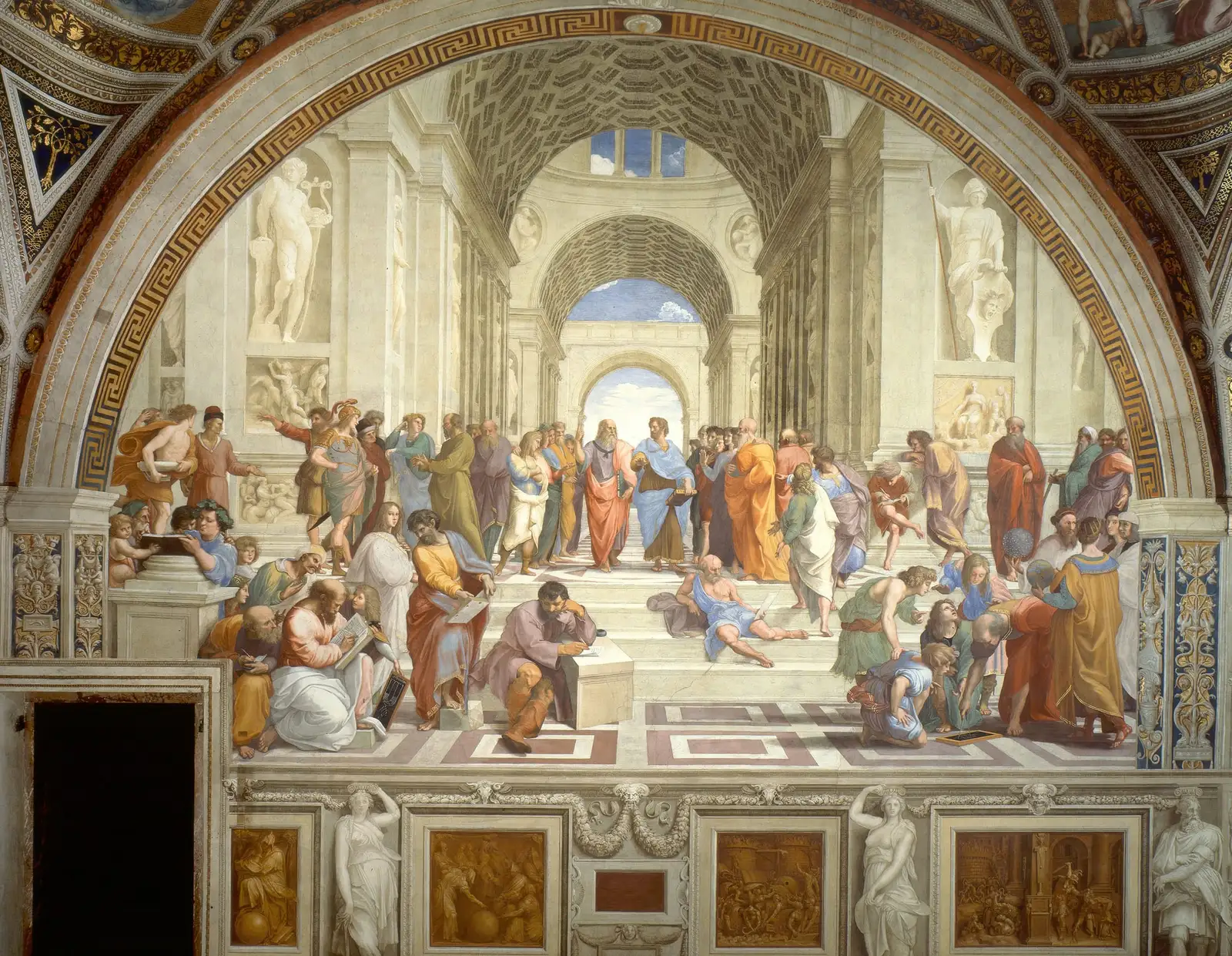
Ernest Becker argued that the terror of death is constitutive of human psychology — that the entire edifice of human culture, from religion to science to art, is in part a response to the inevitability of personal extinction. If that inevitability were removed, or substantially altered, what would happen to the psychological structures that it sustains? The sense of urgency that finitude confers on existence? The projects of symbolic immortality that motivate so much of human achievement?
These are not questions with obvious answers. The intuition that extended life would be richer, more meaningful, more valuable assumes that the qualities that make life valuable are not contingent on its brevity. But there is a competing intuition — expressed most precisely by Nozick’s experience machine thought experiment — that value requires stakes, and stakes require the possibility of irreversible loss. A life in which nothing is at risk because nothing can be finally lost may be a life in which nothing can be finally won.
I do not know how to resolve this tension. I suspect no one does. But I am convinced that it needs to be taken seriously — not as a reason to halt longevity research, but as a reason to pursue it with the philosophical seriousness that its civilizational stakes demand. We are potentially moving toward a transformation of the human condition that is more fundamental than anything since the agricultural revolution, and we are doing so with a degree of collective philosophical preparation that is, at present, substantially inadequate to the magnitude of the change.
This is an argument for more philosophy, more science, and more honest conversation about what we actually want — not for paralysis. The question of what a good life looks like is not easier when you have more time to live it. But it becomes more pressing when that time is no longer fixed by factors outside your control. And the pressure is already building.
Originally published in Portuguese. Read the original here: Computadores Inteligentes, Extensão de Vida e a Reconfiguração das Condições Humanas
Comentários
Ainda não há comentários. Seja o primeiro a comentar «Intelligent Computers, Life Extension, and the Reconfiguration of Human Conditions».
Entre ou crie uma conta para curtir, comentar e receber os próximos textos por e-mail.